
Newton, MA · Garage Door Service
Garage Door Service for Billerica Homes
Newton Garage Door Pros serves Billerica homes built mostly in the early 1970s, with the torsion hardware and steel doors that era brought. Based 16 miles away in Newton.
- Repairs & new doors
- Springs & openers
- Serving 7 nearby communities
The Drive Over
We run this job out of Newton, and Billerica sits about 16 miles out - not a town we're parked in, but one we get to regularly. That distance means we're not going to promise a truck at your curb in twenty minutes, and we won't pretend otherwise. What we can promise is that when we do show up, we've already thought through what's likely waiting for us, because the housing stock out here isn't the same as what we see closer to Newton.
The drive matters less than most companies admit. What matters is whether the tech on the truck knows your door before he opens the panel. A lot of outfits treat every service call the same: show up, look at the spring, quote a number. We'd rather know going in that a house built in the early '70s is probably running original or near-original hardware, because that changes what's in the truck before we ever knock.
If you need us same-day for something urgent, call and ask - we're not going to list a response time here that we can't back up from 16 miles away, but we'll tell you straight when we can get there.
Timing on This Area
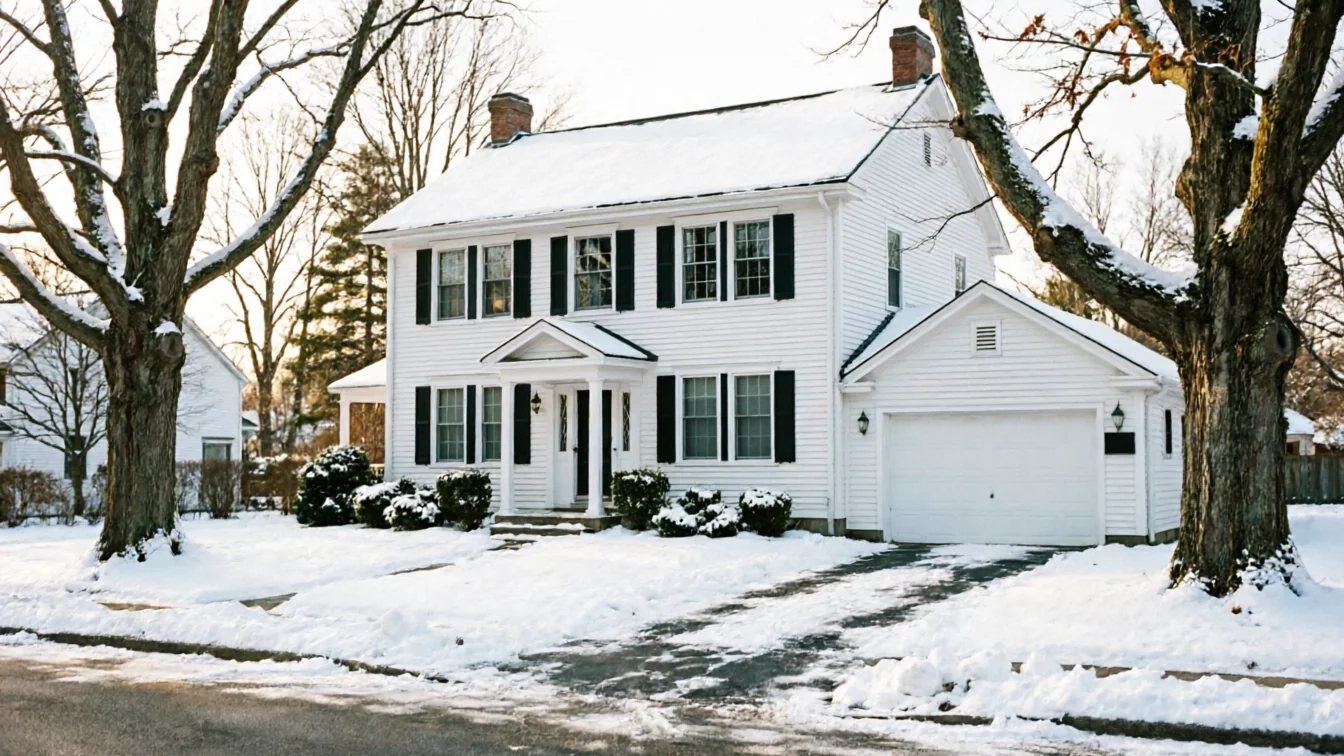
Billerica's median year built is 1973. That's eight years newer than the 1965 median across the broader service area, and it's not a small difference when you're talking about garage doors. A house framed in 1973 was usually built with a single-car or two-car attached garage already in the plan, not added on later, and the door opening is more likely to be a standard width than something a previous owner had to improvise around.
By the early '70s, steel sectional doors were taking over from the old wood panel swing-up style, and torsion springs mounted on a horizontal shaft above the opening had mostly replaced extension springs on the side tracks - though you'll still find extension setups in this stretch of houses, especially on garages added or retrofitted a few years after the main build.
The practical upshot: if your house here is original to its build year, you're likely dealing with a torsion system now three to five decades old, possibly with an opener that's been swapped once or twice since but hardware - tracks, hinges, the spring itself - that's never been touched. That's usually the point where a spring finally goes, not gradually, but all at once.
What the Housing Means for Your Door
A 1973-era steel door wasn't built with much insulation, and this region's climate is firmly in the cold-severe band - the kind of winter that works hardware hard. Thin steel skins on an uninsulated door flex more in deep cold, which stresses hinges and the roller-to-track fit over years of freeze-thaw cycling. If your door still has its original panel, don't be surprised if it's developed a bow or a rattle that wasn't there ten years ago.
We also see openers in this bracket that are a generation or two behind current standards - chain-drive units from the '80s or '90s installed as a first upgrade, now themselves due for replacement. The gear sets in those wear out quietly: a slow grinding sound for months before the opener finally stops lifting at all.
One honest limitation: if your door is original to a 1973 build and the track width or spring size is a discontinued dimension, we may need to special-order a replacement rather than pull one off the truck. That's not common, but it happens on houses this age, and we'd rather tell you that up front than surprise you with a delay mid-job.
This Area's Housing
Billerica has about 15,653 households, a small slice of the roughly 608,678 households across the wider area we cover out of Newton. Median household income here runs $139,706, close to the service-area median of $141,440, which tells you this isn't a market where cheap fixes with a six-month lifespan make sense - most owners here would rather pay once for a torsion spring job done right than call back in a year for the same failure.
Households at this income level also tend to own rather than rent, and owner-occupied houses are the ones where a broken spring or a dead opener becomes the homeowner's problem to solve, not a landlord's deferred maintenance. That's most of what we see on these calls: someone who's lived in the house a while, knows the door's history, and wants a straight answer about whether to fix the spring or replace the whole unit.
We don't have a count of exactly how many of those houses in Billerica still carry their original door - that's not in the data we work from - but the build-year median alone tells us enough to know what we're likely to find.
Frequently asked questions
How far is Billerica from your Newton location?
About 16 miles. We travel out to Billerica regularly, but we're not based there, so we won't quote a response time we can't stand behind from that distance. Call and we'll give you a straight answer on timing for your specific job.
My house in Billerica was built in the early '70s - is the door original?
It's possible. The median build year here is 1973, and a lot of houses from that era are still running their original torsion spring hardware, sometimes with a newer opener bolted on later. If the spring or track looks untouched, treat it as original until proven otherwise.
Why did my spring snap with no warning?
Torsion springs on older steel doors usually fail all at once rather than gradually, especially after decades of cold-weather flex. If your house dates to the early '70s and the spring has never been replaced, sudden failure after years of quiet wear is the normal pattern, not the exception.
Can you always match my old track or spring size?
Usually, but not always. Some dimensions from houses this age are discontinued, and we may need to special-order a part instead of carrying it on the truck. We'll tell you before the job starts if that's the case rather than let it surprise you partway through.
Garage door services in Billerica
Every service our crew runs in Billerica, MA.
Book garage door service in Newton
Call now or request a quote - tell us what the door is doing and where you are.