
Newton, MA · Garage Door Service
What Newton's Pre-Insulation Housing Stock Means for Your Garage Door
Most Newton garage doors sit on houses built 1938-1985, before modern insulation codes. Here's what that means for maintenance in Newton's cold climate.
- Repairs & new doors
- Springs & openers
- Serving 7 nearby communities
What to Check
Most of the garage doors we see in Newton sit on houses built between 1938 and 1985, with the median landing around 1965. That matters because no insulation code applied to garage doors back then. If your door is original, or close to it, start by checking the panel itself - tap it. A hollow, single-layer steel or wood panel with no foam backing tells you it predates any R-value requirement. Next, look at the weatherstripping along the bottom and sides. On a door this old, the rubber has usually hardened and cracked, leaving gaps you can see daylight through. Check the torsion spring and hardware too - a lot of these houses still run the original side-mounted torsion setup, and parts for that older hardware aren't something every supplier keeps on the shelf. One honest limit here: if the door itself is original wood or a non-insulated steel shell, we can seal and weatherstrip it, but we can't retrofit real insulation into a panel that wasn't built to hold it. At some point sealing gaps stops being worth the labor and a full insulated replacement makes more sense.eltype
Season by Season
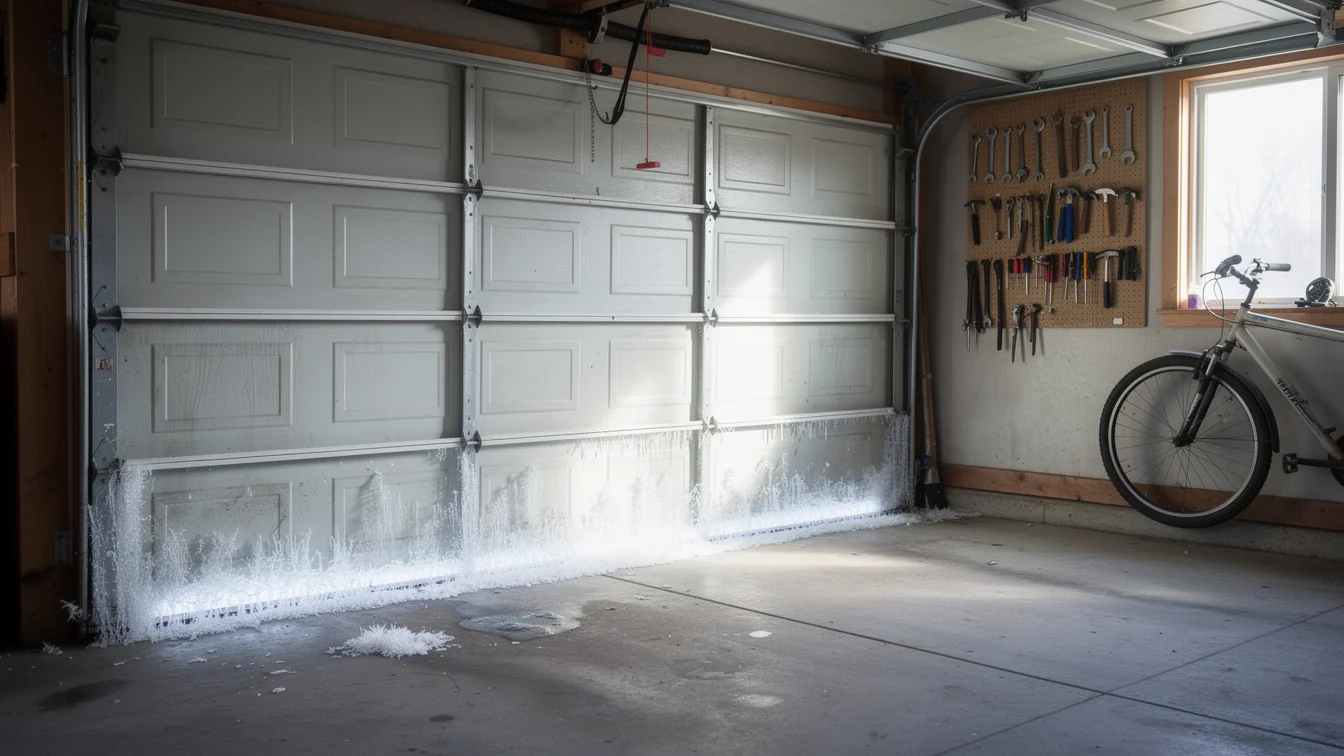
Newton falls in a cold, severe climate band, and that shapes what breaks and when. Going into late fall, check spring tension and lubricate rollers and hinges before the first hard freeze - cold steel contracts, and a spring that was fine in October can bind or snap once temperatures drop hard. Through winter, ice buildup on the bottom track is the main complaint we hear; a door that doesn't seat flush because of age or warping lets meltwater run under the threshold and refreeze overnight, jamming the track by morning. Spring brings the opposite problem: freeze-thaw cycling loosens fasteners and track brackets that were tightened the season before, so a walk-around check in March catches things before they become a stuck door in April. Summer humidity swells original wood panels and jambs on the older houses in this area, which can throw the door out of square enough that the opener strains to close it fully. None of this is dramatic on its own, but on a door built before insulation standards existed, the cumulative wear from a full cold-severe year shows up faster than it would on newer hardware.
The Situation
The service area around Newton covers 608,678 households, with 234,460 of those owner-occupied houses - and a big share of that stock dates to the 1960s and 70s construction wave noted across the area's 71 named villages and neighborhoods. Median household income across the service area runs $141,440, and that income level is part of why we see more owners here choose full replacement with an insulated steel door rather than patching an original wood or thin-steel panel year after year. It's a straightforward math problem: sealing and re-weatherstripping an old door buys a few more seasons, but once the panel itself is failing, the labor to keep nursing it along starts costing more than a new insulated unit would. That doesn't mean every older door needs replacing - plenty of 1965-era doors with solid hardware just need a spring, cable, or roller swap and they're good for years more. But on houses at the older end of that 1938-1985 range, we're seeing the original panel reach the point where repair isn't the economical call anymore.
What Local Conditions Do
The combination that actually matters in Newton is the age of the housing stock meeting the cold-severe climate band head on. A panel built before insulation rules existed wasn't designed to manage the temperature swing between a warm garage wall and a cold steel door face, so you get condensation forming on the inside of the panel in winter - which then drips onto the floor and, over years, rusts out the bottom section first. On a newer insulated door that gap is engineered for; on a 1965-era door it isn't there at all. Add in the freeze-thaw cycling that's routine for this climate band, and the track brackets and hinges on an original door loosen faster than they would in a milder climate, because the metal is expanding and contracting through a wider range each winter. We're not saying every old door is a lost cause - plenty hold up fine with regular spring and hardware service. But when a homeowner with an original 1960s door tells us it's
Frequently asked questions
My garage door is original to a 1965 Newton house - is it worth repairing or should I replace it?
Depends on what's failing. If it's a spring, cable, or roller, repair usually makes sense even on an older door. If the panel itself is the problem - no insulation, rust from condensation, warping - repair just buys a season or two before you're back to the same issue, and replacement with an insulated door tends to be the better long-term call.
Why does my garage door freeze shut in winter but it never used to?
On an older, non-insulated door, condensation forms on the inside face overnight and that moisture runs to the bottom track. In Newton's cold-severe climate, repeated freeze-thaw cycling means that water refreezes fast, and a track or threshold that's slightly out of square from age makes it worse. A newer insulated door with tighter seals doesn't get this nearly as often.
Is it normal for hardware to loosen every spring on an old garage door here?
Yes, especially on houses from the 1938-1985 era. The metal in older brackets and hinges contracts and expands through a wide range each winter in this climate, and that movement works fasteners loose over the season. A spring check and retightening before summer is routine maintenance on a door this age, not a sign something's seriously wrong.
Related garage door services in Newton
More garage door guides
Book garage door service in Newton
Call now or request a quote - tell us what the door is doing and where you are.