
Newton, MA · Garage Door Service
Weather Seals and Drafts in Newton Garage Doors
Newton homes built mostly 1938-1985 lose heat through old garage door seals. Here's what to check, season by season, in Newton's cold climate.
- Repairs & new doors
- Springs & openers
- Serving 7 nearby communities
What to Check
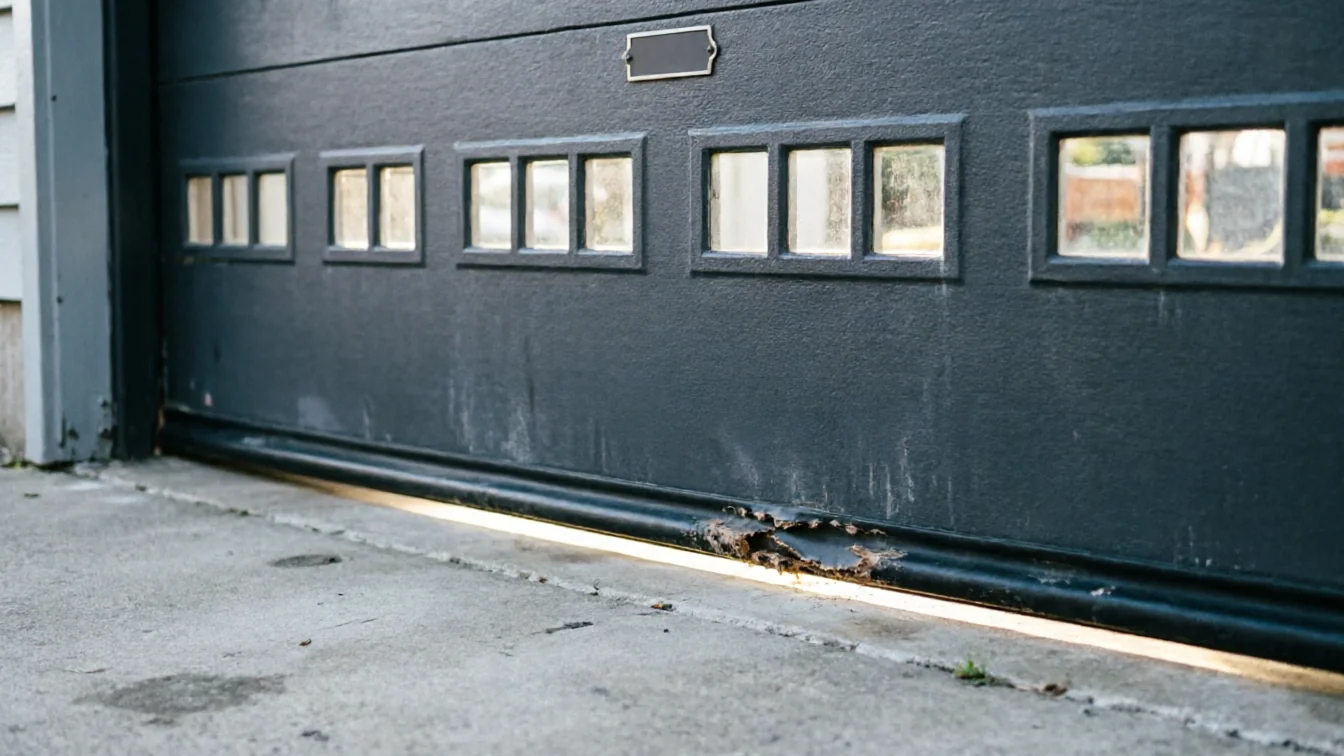
Start at the bottom. On a house in Newton Center, Waban, or Auburndale built anywhere in that long run between 1938 and 1985, the original bottom seal has almost certainly been replaced at least once, and the track it sits in has probably warped a little with age. Run your hand along the floor seam on a cold morning. If you feel air moving, the rubber has hardened or the track has pulled away from the slab.
Next check the side seals and the top seal where the door meets the frame. Homes from this era, especially the 1960s and 70s stock that makes up most of the service area, often have wood jambs that have shifted slightly over sixty-plus years. A seal that fit tight in 1975 may now have a gap you can slide a sheet of paper through. Check the corners first; that's where gaps show up earliest.
Last, look at the panel seams themselves, not just the perimeter. Steel doors installed in the 1980s or 90s retrofit onto an older frame don't always sit flush, and that mismatch is a draft source nobody thinks to check because it isn't at the edge of the door.
Season by Season
Newton sits in a climate zone rated cold and severe, and that matters more for a garage door than most people realize. In late fall, before the first hard frost, is the time to check seals, because rubber that's already stiffened from a summer of heat won't seal evenly once temperatures drop.
Through winter, a loose bottom seal doesn't just let in cold air. It lets in meltwater and road salt runoff from the driveway, which accelerates rust on the bottom panel and on any exposed hardware. If you notice ice forming in a line along the floor seam, that's the seal telling you where it's failing.
Spring is when wood jambs that swelled with winter moisture start to shift back, and that movement can open gaps that weren't there in January. It's worth a second check in April or May, not just the fall.
Summer heat softens old rubber seals enough that they can look fine while sealing badly. A seal that's cracked but still pliable in July will often fail outright by the next cold snap, so summer is really prep time for the season that matters.
The Situation
Across the area, housing built mostly in the 1960s and 70s, with the broader range running 1938 to 1985, means a lot of garage doors and their surrounding frames are original or close to it in a lot of neighborhoods. Newton covers 71 named areas, from Chestnut Hill to Newton Upper Falls to Oak Hill, and the age of the housing stock doesn't vary much between them. What varies is how well any given seal replacement was done, and how exposed the garage is to wind and road spray.
A door facing a driveway that catches winter wind off an open yard will chew through a seal faster than one tucked under an attached garage with a windbreak on one side. We can't tell you which seal is failing without looking at it, and a seal that looks fine from inside the garage can still be letting air through on the outside face. That's the limitation worth being honest about: a visual check from indoors catches maybe half of what's actually wrong.
What Local Conditions Do
Cold severe winters do two things to a garage door seal that milder climates don't. First, repeated freeze-thaw cycles work on any gap in the seal, widening it a little more each cycle rather than letting it settle. Second, the temperature swing between a cold garage and a heated adjoining space, common in homes from this era where the garage sits under or beside living space, pulls moisture to the door and frame, which rots wood jambs faster than dry cold alone would.
In a median-income area like this one, where a lot of houses have had one or two renovations since the 1965 median build year, it's common to find a newer door bolted onto original framing that was never re-squared. That mismatch is a draft source that no amount of new weatherstripping fixes on its own, because the gap isn't uniform around the door. The seal can only do its job if the frame it's sealing against is still straight.
Frequently asked questions
Why does my garage door let in cold air even with new weatherstripping?
If the door is newer but the frame is original to a 1960s or 70s build, the frame may have shifted enough that the gap around the door isn't even. New rubber seals against an uneven gap the same way old rubber did: unevenly. The fix is usually re-squaring the jamb, not another round of seals.
When should I check my garage door seals in Newton?
Late fall, before the first hard frost, and again in spring once wood jambs that swelled over winter settle back. Given the cold severe climate here, a seal that looks fine in summer heat can fail outright by the first real cold snap, so don't wait for a draft to show up before checking.
Can road salt damage my garage door seals?
Yes. A loose bottom seal lets meltwater and salt runoff track in under the door, which speeds up rust on the bottom panel and any exposed hardware. It's one of the first things to check if you notice a line of ice or corrosion along the floor seam in winter.
Related garage door services in Newton
More garage door guides
Book garage door service in Newton
Call now or request a quote - tell us what the door is doing and where you are.