
Newton, MA · Garage Door Service
Why a Garage Door Goes Off Track in Newton
Newton's housing stock runs 1938-1985 with original hardware still in a lot of garages. Here's why tracks bend, rollers jump, and what to check before you call.
- Repairs & new doors
- Springs & openers
- Serving 7 nearby communities
What to Check
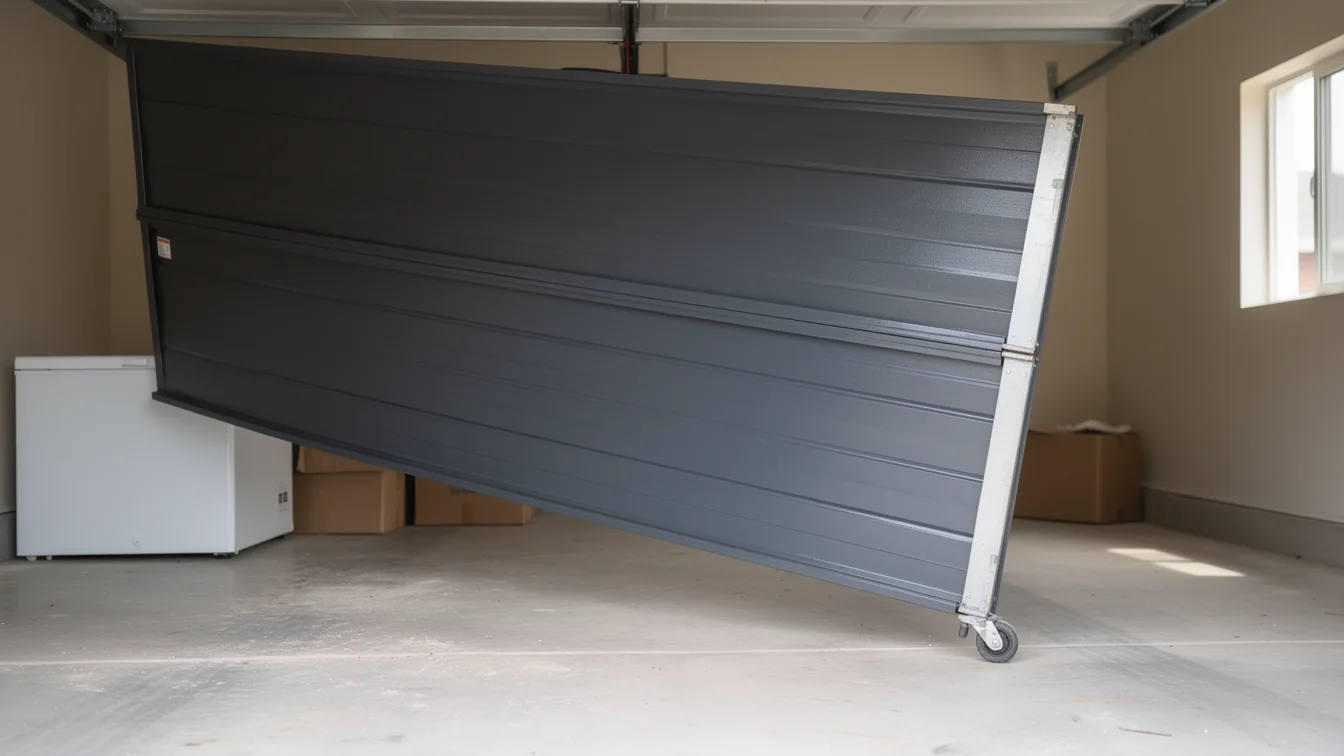
Start at the rollers. On a door that's come off track, you'll usually find one of two things: a bent track rail, or a roller that's worn down and popped out of the channel. Run your hand along the vertical track near the bottom bracket - that's where impact damage shows up first, usually from a car bumper tap or a door that's been forced down over an obstruction.
Next, check the track mounting brackets where they bolt to the framing. In a lot of Newton's older two-car garages - built between 1938 and 1985, with a median build year around 1965 - the framing itself has settled over sixty-plus years. That shift pulls the bracket out of true, and the track follows it out of square a little at a time. You won't see it happen in one day. You'll see a door that rubs on one side for months, then finally jumps the roller.
Also look at the cable drums and the bottom fixtures. If one cable has gone slack while the other stayed tight, the door is being pulled unevenly every time it runs, and that's a direct path to a track jump. Don't try to force the door back onto the track yourself if a cable's involved - that's spring tension, and it's not a DIY fix.
One honest limit here: if the track is more than mildly bent, straightening it rarely holds. Replacement track is the better call, and it's usually not expensive.
Season by Season
Newton sits in a cold-severe climate band, and that matters more to a track than most homeowners expect. Through a hard winter, the metal track contracts slightly and the lubricant in the rollers thickens. A door that ran quiet in October can start grinding by January simply because the roller bearings are stiffer and taking more load to turn.
Freeze-thaw cycles are the bigger issue. Water that gets into the slab seam at the base of the track-mounting wall freezes, expands, and nudges the framing a fraction of an inch. Do that every winter for decades - which is exactly the age range a lot of this housing stock is in - and the cumulative shift is enough to throw a track out of parallel.
Spring brings a different problem: humidity swings. Wood jambs that track brackets are often lagged into can swell and loosen their grip on the screws over a wet spring after a dry winter. That's when you'll hear a new rattle that wasn't there in March.
Summer is the forgiving season - this is when a slightly-off track is easiest to catch and correct before next winter makes it worse. If you've noticed a door that labors or drifts to one side, don't wait for the cold to make the decision for you.
The Situation
A big share of Newton's garages - across neighborhoods like Newton Highlands, Waban, Auburndale, West Newton, and Newton Upper Falls - were built in that same 1960s-70s wave that defined most of this town's housing. That means a lot of original or near-original track hardware: steel rail on wood-framed openings, often with brackets sized for the lighter doors common at the time.
When those openings got heavier replacement doors over the years - insulated steel instead of the original single-layer panel - the original track and bracket spacing sometimes stayed the same while the load went up. A track built for a 90-pound door doesn't flex the same way under a 180-pound insulated one. That mismatch shows up as a track that bows slightly under load, which over time becomes a track that lets a roller jump.
This isn't unique to one street or one block - it's a pattern tied to the age of the housing itself, not to any specific address. If your garage was part of that original building wave, the hardware question is worth asking even if the door itself still looks fine.
What Local Conditions Do
Put the two things together - cold-severe winters and a housing stock that's mostly fifty to eighty-five years old - and you get a specific failure pattern: tracks that were installed square in the 1960s and 70s, on framing that's moved slightly every winter since, carrying doors that in many cases are heavier than what the hardware was designed for.
That's not a dramatic failure. It's slow. A door that's a little stiff for a year, then starts rubbing on one side, then finally drops a roller on a cold morning when the metal's at its stiffest and least forgiving.
The practical upshot: if your garage dates to that original building era and you're hearing new noise or seeing the door drift to one side, it's worth having the track and brackets checked before winter rather than after a roller jumps mid-cycle. Catching a bracket pulling loose from settled framing is a small job. A door that's come fully off track with the spring still under tension is not something to handle alone.
Frequently asked questions
Why did my garage door suddenly jump off the track?
Usually it's not sudden - it's the end of a slow process. A bent rail, a worn roller, or a bracket that's pulled loose from settled framing all let the door run slightly out of line for months before a roller finally pops free, often on a cold morning when the metal and lubricant are stiffest.
Is this common in older Newton houses?
It shows up more in garages from the 1960s-70s building wave that makes up most of this town's housing stock, especially where original track and brackets were sized for lighter doors than the insulated steel doors common today.
Can I push the door back onto the track myself?
Not if a cable is loose or the spring is still under tension - that's the one thing we'd tell you not to try. If the door is simply resting off-track with no tension on it, it can sometimes be guided back by hand, but check the cables first.
Does cold weather actually make this worse?
Yes. In a cold-severe climate like Newton's, freeze-thaw cycles shift foundation and framing slightly each winter, and stiffened lubricant in the rollers adds friction right when the hardware is least able to flex with it.
Related garage door services in Newton
More garage door guides
Book garage door service in Newton
Call now or request a quote - tell us what the door is doing and where you are.