
Newton, MA · Garage Door Service
Is Your Newton Garage Door Worth Fixing, or Done
Newton homes mostly date 1938-1985. Here's how to tell if your garage door's original hardware is worth repairing or past its working life.
- Repairs & new doors
- Springs & openers
- Serving 7 nearby communities
What to Check
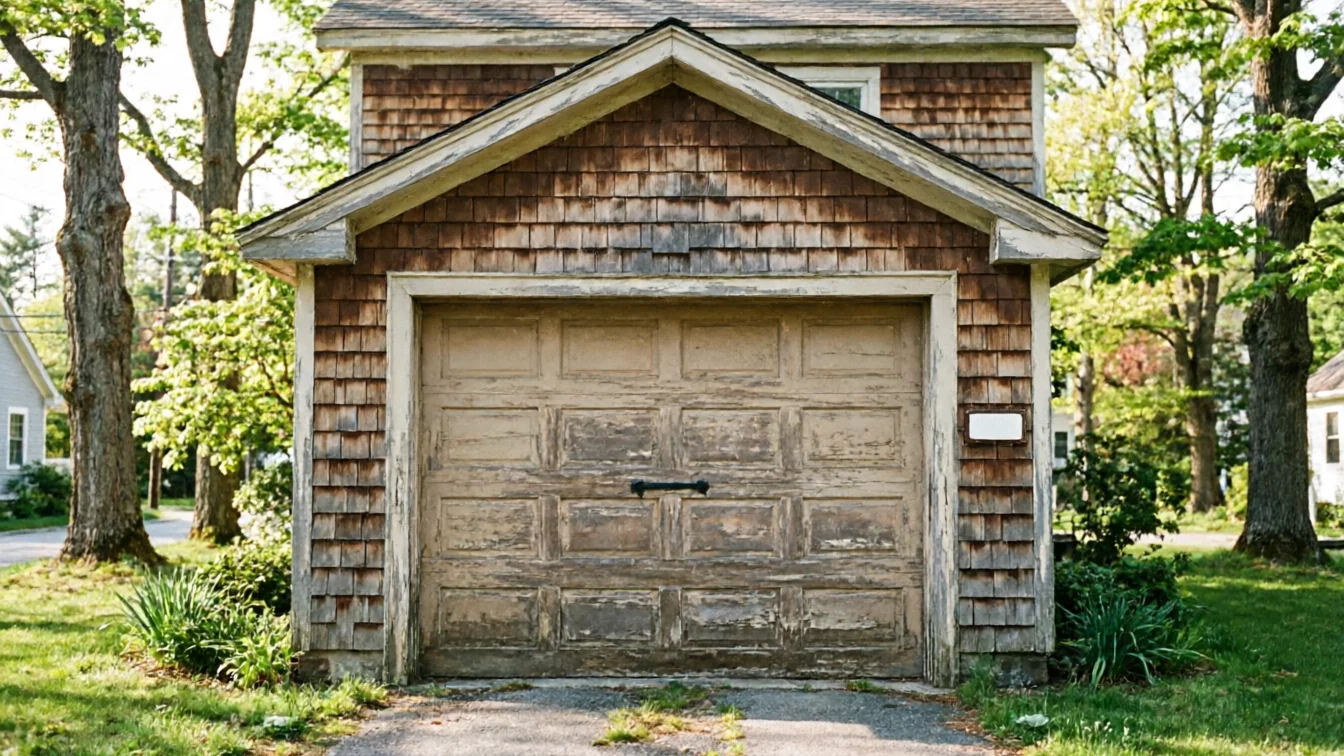
Start with the spring, not the opener. Most Newton houses - in Newton Center, Waban, Auburndale, Newtonville, and the other villages that make up the city's 71 named areas - went up between 1938 and 1985, with the bulk from the 1960s and 70s. That means a lot of original torsion or extension spring setups are still bolted to the same jamb brackets they came with. Lift the door by hand with the opener disconnected. If it's heavy and won't hold still at waist height, the spring is tired, and that's a straightforward fix, not a reason to replace the whole door.
Next check the track alignment and the rollers. In a house this age, the track was almost certainly set for a wood-panel door, and if a steel door went in later without resetting the brackets, you'll see wear on one side of the track that isn't on the other. Run a hand along the bottom panel for rust bubbling through the paint - common on doors that have sat through sixty winters of road salt runoff. Rust at the bottom corners is a different problem than a tired spring, and it usually means the panel itself, not just the hardware, needs attention.
Finally, check the header above the door for daylight. Gaps there point to a frame that's shifted over decades, which no amount of weatherstripping will fully solve.
Season by Season
Newton sits in a cold, severe climate band, and that shows up on a door twice a year, not once. Fall is when you want the spring and cable checked, before the first hard freeze makes steel cable brittle and torsion springs stiffer than they test in August. A spring that's borderline in October can snap in January, usually on the coldest morning, which is also the worst morning to be stuck.
Winter is when the slab under the door matters. Older driveways in this climate heave slightly with frost, and a door that scraped a little in July can bind hard in February if the track wasn't adjusted for it. If your door is dragging on one side only in cold months, that's track alignment, not a dying opener - don't spend money on the opener first.
Spring is cleanup season: salt residue and sand from the winter sit at the bottom panel and in the track, and if they're not cleared, they accelerate the rust check mentioned above. Summer is the easiest season on a door here, which makes it the right time for the inspection you didn't have time for in October. Waiting until a door fails in January costs more than catching it in May.
The Situation
Across the Newton area there are 234,460 owner-occupied houses out of 608,678 households, and a median household income of $141,440 - a market where people tend to maintain rather than defer, and where a working original door often still has real years left in it. That changes the math on repair versus replace: a well-kept door from the 1965-median housing stock, with a spring and rollers swapped out along the way, is frequently a better bet than a new install, because the door panel itself, if steel and rust-free, usually outlasts two or three sets of hardware.
Where it stops being worth fixing is when the rust has gone through a bottom panel, when the track brackets are pulling out of a jamb that's shifted, or when the door is a style old enough that replacement parts have to be special-ordered rather than pulled off a shelf. At that point you're paying labor twice: once to patch it, once in a year or two to actually replace it. We'll tell you straight if that's where your door is - we don't have a stake in talking you into a repair that won't hold.
What Local Conditions Do
The cold-severe climate here does two specific things to an older door. It makes steel springs and cables more brittle in the coldest months, which is why winter failures cluster on the first deep-freeze days rather than being spread evenly across the year. And it drives the frost heave that misaligns tracks on houses built on the shallower foundations common to the 1938-1985 stock found through Newton's villages, from Newton Corner to Newton Upper Falls.
Salt and sand tracked in from winter driving sit at the bottom panel seam, which is the single biggest reason older steel doors rust from the bottom up rather than failing from the hardware first. None of this means a door is doomed - it means the maintenance schedule has to account for a New England winter specifically, not a generic yearly tune-up. A door maintained with that in mind can run well past what the original hardware was rated for; one that isn't tends to fail at the worst possible time, usually a cold morning when the spring finally gives out.
Frequently asked questions
My house in Newton Center still has its original garage door from the 1960s. Is that a problem?
Not by itself. A steel door from that era, if it's rust-free and the panel hasn't warped, can still be sound. The hardware - spring, cables, rollers - is what wears out first and what we'd check before touching the door itself. Age alone isn't the deciding factor; condition of the panel and the track alignment are.
Why does my door only stick in winter?
Likely frost heave shifting the slab or track slightly, combined with a torsion spring that's stiffer in cold weather. This is common in older Newton houses built on shallower foundations. If it eases up by summer and comes back every winter, it's track alignment, not a failing opener.
Is it ever cheaper to replace than repair an old door?
Yes - once rust has gone through a panel or the track brackets are pulling loose from a shifted jamb, repeated small repairs cost more over a couple of years than one replacement. We'll look at the actual panel and hardware condition before recommending either way.
Related garage door services in Newton
More garage door guides
Book garage door service in Newton
Call now or request a quote - tell us what the door is doing and where you are.